Anúncios
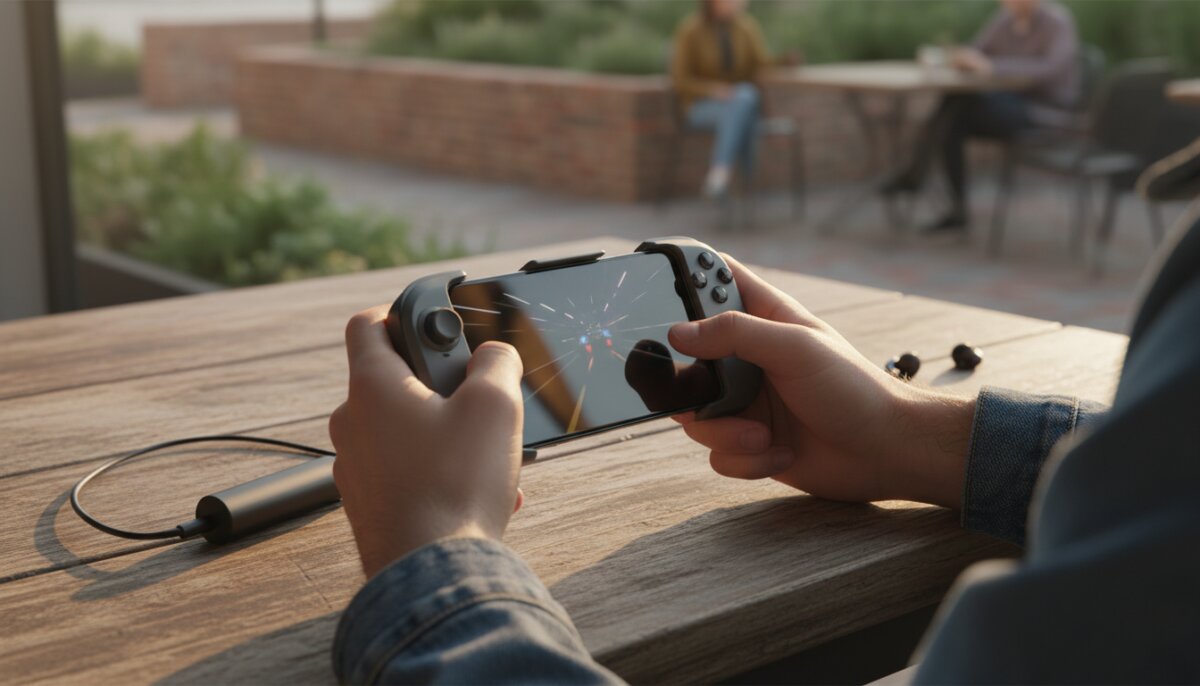
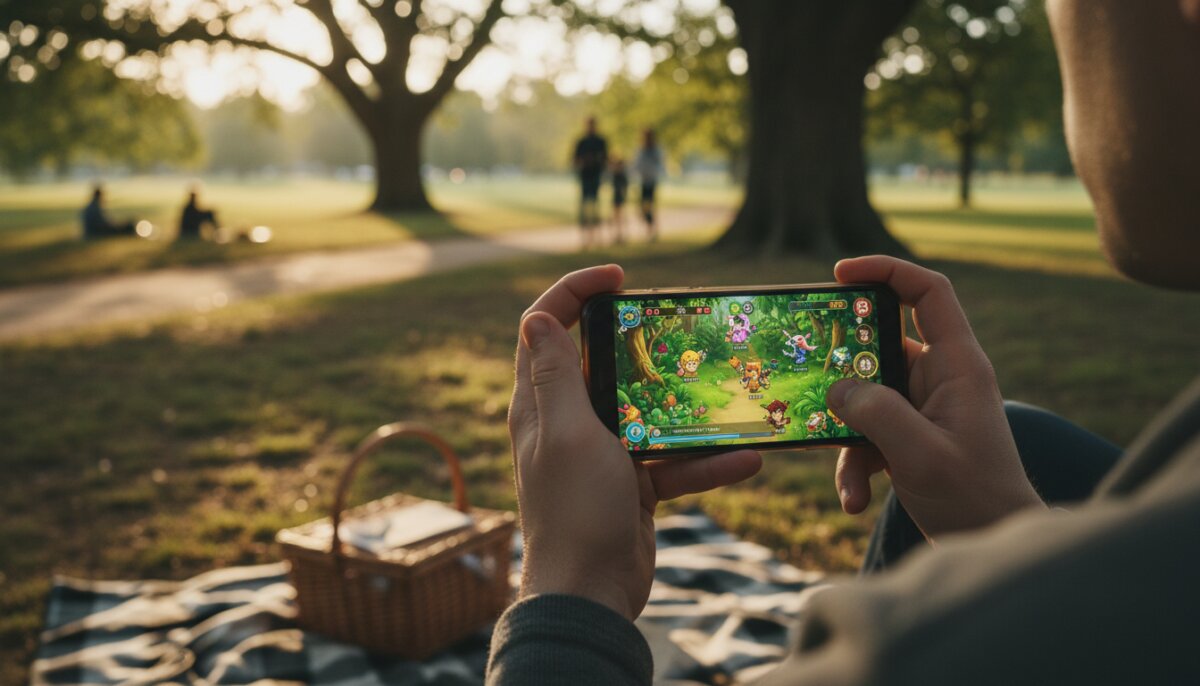
Your coffee break just beat your weekend gaming marathon. Sounds backwards, right? But look around: commuters squeezing in a quick match between subway stops, parents sneaking in a ten-minute run while the pasta boils, office workers decompressing with a puzzle game before their next meeting. The way people actually play has shifted, and game studios are finally catching up.
The era of assuming every gamer has four uninterrupted hours is fading fast. Short-session gaming isn’t a lesser form of play — it’s becoming the default shape of the hobby for millions.
Anúncios
The Attention Economy Changed How We Play
Your time is being pulled in more directions than ever. Between streaming services, social feeds, side hustles, and actual work, the idea of carving out a six-hour block for a single open-world epic feels almost luxurious — and often unrealistic.
That’s why short-session design has quietly become one of the most important concepts in game development. A well-made game now respects your calendar the same way a good TV show respects your binge limits.
What counts as a short session?
There’s no official definition, but most designers treat it as anything a player can meaningfully start and finish in roughly five to twenty minutes. The key word is meaningfully — you need to feel like you accomplished something, not like you quit halfway through a chore.
Why Short Sessions Are Winning
The shift isn’t just about busy schedules. Several forces are pushing games toward bite-sized formats at the same time, and they reinforce each other.
- Mobile-first habits: Phones trained an entire generation to expect instant play, instant pause, instant resume.
- Cloud and handheld hardware: Portable devices and streaming services removed the friction of being tied to a TV and a couch.
- Social rhythms: Matchmade games like battle royales and auto-battlers deliver full narratives in under half an hour.
- Content saturation: With endless entertainment options, games compete for minutes, not evenings.
- Mental bandwidth: After a long day, a tight twelve-minute round often feels better than committing to a dense RPG questline.
Design Tricks That Make Short Play Feel Complete
Designing a satisfying short session is harder than it looks. You can’t just chop a long game into chunks and call it a day. Great short-session games build entire arcs — tension, climax, reward — into a few minutes.
Tight feedback loops
Roguelikes nail this. Every run has stakes, surprises, and a clear ending, even if it only lasts ten minutes. You walk away with a story, some progress, and a reason to start again.
Persistent progression
Modern games let short bursts add up. Daily objectives, meta-upgrades, unlockable cosmetics, and seasonal passes mean your twelve-minute session still moves a larger needle. Progress doesn’t evaporate just because you put the controller down.
Forgiving save systems
Quick resume on modern consoles, autosaves every few seconds, and suspend-on-close handhelds have removed the dread of losing progress. You can stop mid-fight and pick up exactly where you left off an hour later.
Genres Built for the Short Session
Some genres were practically engineered for limited play windows, while others are adapting to survive. The winners share a common DNA: clear goals, contained runs, and meaningful takeaways.
- Roguelites and roguelikes — Every run is self-contained but feeds into long-term progression.
- Auto-battlers and deckbuilders — A full game fits inside a lunch break, with deep strategic replay value.
- Battle royales and extraction shooters — Rounds are tense, finite, and complete stories in themselves.
- Puzzle games — Level-based structure makes them perfect for waiting rooms and commutes.
- Sports and racing titles — Single matches or laps deliver quick, repeatable satisfaction.
What This Means for Big, Long Games
Don’t panic — the sprawling 80-hour epic isn’t dying. But it is evolving. Big games are increasingly structured so you can enjoy them in smaller slices without feeling punished.
Look at how modern RPGs design side quests as compact, self-contained stories. Notice how open-world games place fast travel points and quick-start objectives everywhere. Even narrative-heavy titles now offer recap summaries when you return after a week away. These aren’t afterthoughts — they’re responses to how you actually live.
The hybrid model
The smartest studios design for both extremes. A player can binge for six hours on a Saturday or sneak in fifteen minutes on a Tuesday, and the game respects both. That flexibility is becoming a baseline expectation, not a bonus feature.
The Upsides and the Trade-offs
Like any shift in a creative medium, short-session gaming brings real benefits along with genuine concerns. It’s worth looking at both sides honestly.
The wins
- Accessibility: More people can play without overhauling their lives.
- Lower burnout: Shorter bursts are easier on your eyes, posture, and attention.
- Healthier pacing: Defined endpoints help you stop when you intended to stop.
- Broader audiences: Parents, shift workers, and older players find gaming easier to fit in.
The trade-offs
- Monetization pressure: Short-session games sometimes lean heavily on microtransactions and battle passes.
- Depth concerns: Slow-burn storytelling is harder to pull off when players engage in fragments.
- FOMO mechanics: Daily rewards and limited-time events can feel more like chores than choices.
- Attention fragmentation: Constant bite-sized play can weaken your tolerance for longer, contemplative experiences.
How to Get the Most Out of Short Gaming Sessions
If your playtime is limited, a little strategy goes a long way. You don’t need to finish every game you start, and you definitely don’t need to chase every seasonal event.
- Pick games with clear exit points. Look for round-based, level-based, or mission-based structures.
- Keep two games in rotation. One for focused, meaty sessions. One for low-commitment play when you’re tired.
- Use quick resume features. Modern hardware makes pausing nearly friction-free — take advantage of it.
- Set a soft timer. A simple clock keeps a five-minute session from turning into a two-hour one you’ll regret tomorrow.
- Skip games designed to waste your time. If the fun is gated behind grinding or manipulative dailies, move on.
Quick Questions Players Keep Asking
Are short-session games less serious or artistic?
Not at all. Length has never been a measure of artistic value. A tight puzzle game or a brutal roguelike can be just as emotionally resonant and mechanically brilliant as a massive RPG.
Will single-player epics disappear?
No. Long, story-driven games have a loyal audience and will keep being made. They’re just becoming more flexible about how and when you play them.
Is this trend just mobile gaming taking over?
Mobile influenced it heavily, but the shift cuts across every platform. Consoles, PC, and handhelds all show the same pattern: players want the option to play in smaller, satisfying chunks.
Where Gaming Goes From Here
The future of gaming isn’t shorter games — it’s smarter respect for your time. The best studios are learning that a player who gets fifteen great minutes will come back tomorrow, while a player who feels trapped in a two-hour commitment might not come back at all.
Expect more hybrid designs, more forgiving save systems, and more genres quietly borrowing short-session DNA. Expect stories structured like TV episodes rather than feature films. And expect the definition of a “real gamer” to keep expanding, because gaming is no longer about how long you play — it’s about how much you enjoy the time you spend. That’s a shift worth celebrating, even if it only takes ten minutes at a time.