Anúncios
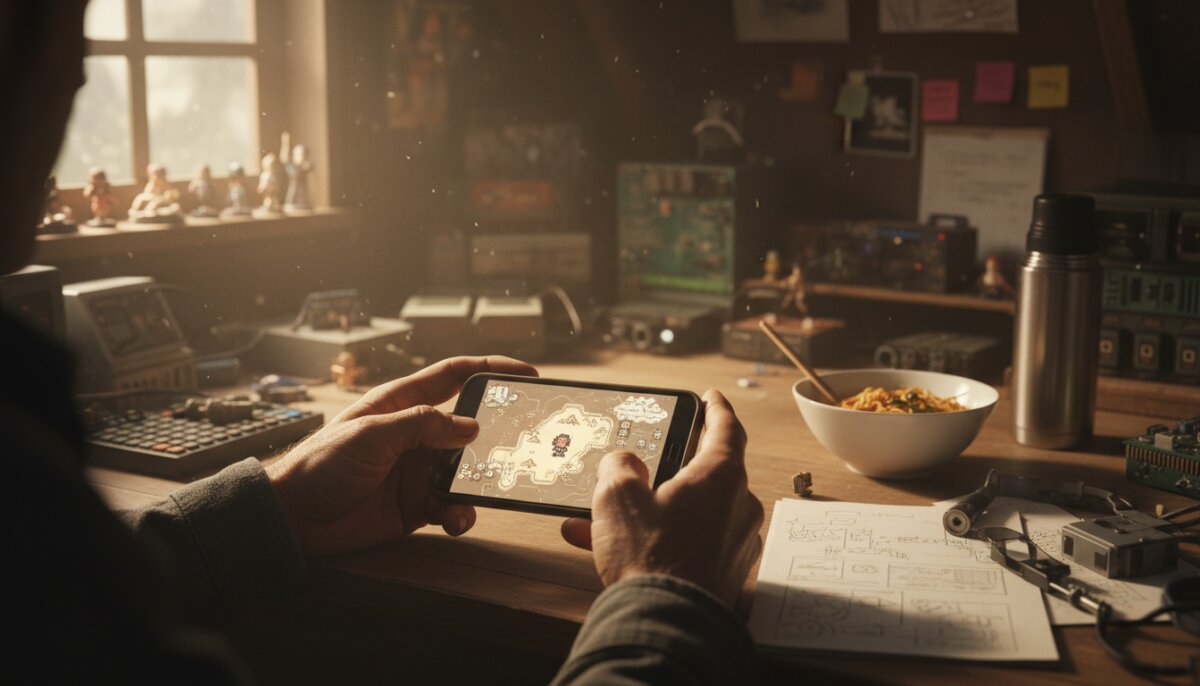
Picture this: you’re stuck in a dim Victorian study, a cipher wheel in one hand, a cryptic letter in the other, and only forty minutes before the clock runs out. Now picture the same puzzle on the bus ride home, held in your palm, ticking away between subway stops. That’s the quiet magic happening in mobile gaming right now — escape rooms, once considered a purely physical, group-bound experience, have found a second home on the small screen.
It wasn’t obvious this would work. The appeal of a real-life escape room leans heavily on atmosphere, teamwork, and the tactile thrill of rummaging through drawers. Yet mobile adaptations aren’t just surviving — they’re thriving, often outperforming bigger-budget genres in player retention. Let’s look at why this particular format clicks so naturally with phones.
Anúncios
The Format Was Practically Designed for Short Sessions
Most escape room puzzles are self-contained logic units. You solve a combination lock, you move on. You decode a message, you move on. That modular structure maps beautifully onto how people actually use their phones — in five-minute bursts while waiting for coffee, ten minutes during a lunch break, maybe half an hour before bed.
Compare that to an open-world RPG, where quitting mid-dungeon feels like abandoning a commitment. Escape room games let you pause after each small victory, which is exactly the emotional beat mobile play needs. You get closure without guilt.
Bite-Sized Dopamine
Every solved puzzle delivers a clean little hit of satisfaction. Mobile developers call this micro-reward pacing, and escape rooms do it naturally without needing gacha mechanics or loot boxes to manufacture the feeling.
Touch Controls Finally Feel Intentional
For most genres, touchscreens are a compromise. Shooters crave precise aim, platformers want tactile buttons, strategy games get cramped. But escape rooms? Tapping a drawer, pinching to zoom on a torn note, dragging a gear into place — these gestures feel more natural than a mouse click or a controller prompt ever could.
There’s something deeply satisfying about physically rotating a 3D object with your thumb to inspect its underside. That intimacy with the puzzle — your finger literally on it — is a genuine upgrade over PC versions, not a downgrade.
Atmosphere Translates Better Than You’d Think
You might assume a tiny screen kills the mood. In practice, the opposite often happens. Play with headphones in a quiet room, and that close-up view of a candlelit desk becomes weirdly immersive — more so than a large monitor across a brightly lit living room.
Mobile games have gotten serious about binaural audio design, and escape rooms lean hard into creaking floors, distant thunder, ticking clocks. The phone becomes a little portable atmosphere machine, and the smaller frame focuses your attention rather than scattering it.
What Makes the Genre Fit So Well
If you break down why the pairing works, a few specific traits stand out:
- Low graphical demand. Most escape rooms are single-location scenes. No sprawling landscapes, no physics-heavy crowds. Phones handle them easily, even older models.
- Pause-friendly design. Your progress doesn’t evaporate if you get a phone call.
- Minimal input complexity. No virtual joysticks, no finger gymnastics.
- Universal appeal. Puzzles don’t require reflexes, so players across age groups engage equally.
- Replay-resistant but shareable. You finish a room once, but you love recommending it to friends.
The Hint System Solves an Old Problem
Classic point-and-click adventures had a reputation for cruelty — obscure solutions, pixel-hunting, hours of being stuck. Mobile escape rooms fixed this with graceful hint systems that don’t feel like cheating.
Most games now offer tiered hints: a nudge first, a clearer suggestion next, the full solution as a last resort. You stay in flow instead of rage-quitting. That design philosophy turns frustration into a manageable tension, which is really what puzzle games should aim for.
Why This Matters on Mobile Specifically
Mobile players don’t have patience for 20-minute walkthroughs on a second screen. They want the help inside the app, instant, and usually free after watching a short ad. That economic model happens to align perfectly with escape room pacing — a hint is worth an ad break, and nobody feels robbed.
Solo Play Is a Feature, Not a Limitation
Real escape rooms are social by necessity — you book them with friends, you shout clues across the room. That’s part of the fun, but it’s also a barrier. You need to coordinate schedules, drive somewhere, pay per person.
Mobile flips the equation. You get the puzzle-solving core without the logistics. Introverts, late-night thinkers, commuters, parents who can’t find a sitter — all of them suddenly have access to the genre. The experience becomes personal and meditative rather than chaotic and social, and that’s a legitimate alternative, not a lesser version.
Pros and Cons of Mobile Escape Rooms
What Works Well
- Play anywhere, anytime, in short sessions
- Touch controls suit the genre naturally
- Headphones create strong immersion on small screens
- Hint systems prevent hard dead-ends
- Far cheaper than booking a physical room
What Gets Lost
- No shared laughter with teammates
- Tactile props replaced by simulated ones
- Some games push ads or in-app purchases aggressively
- Replay value is limited once puzzles are solved
- Tiny screens can strain eyes during long sessions
Tips for Getting the Most Out of Mobile Escape Rooms
If you’re planning to try the genre — or deepen an existing habit — a few small adjustments make a noticeable difference.
- Use headphones. Sound design carries half the atmosphere. Phone speakers flatten everything.
- Play in a quiet space. These games reward focus. A crowded café will distract you mid-puzzle.
- Keep a notepad nearby. Some puzzles involve numbers, symbols, or sequences that are easier to track on paper than in your head.
- Resist hints for at least ten minutes. The satisfaction of self-solving is the whole point.
- Rotate between games. Finishing one series and jumping to another developer’s style keeps puzzle fatigue at bay.
The Design Lessons Other Genres Keep Ignoring
Escape room games succeed on mobile partly because they respect your time. There’s no stamina meter forcing you to wait two hours to keep playing. No aggressive push notifications guilting you back. No elaborate tutorial that won’t let you skip.
The best titles in this space understand something subtle: a puzzle game’s job is to respect the player’s intelligence. When you trust players to figure things out, to pace themselves, to come back when curiosity pulls them — they reward you with genuine engagement. That’s rare in mobile gaming, and it’s why the genre feels refreshing every time you open it.
Common Questions About the Genre
Are mobile escape rooms as good as real ones?
They’re a different experience, not a replacement. Physical rooms win on social energy and tactile props. Mobile wins on accessibility, pacing, and puzzle variety. Most enthusiasts end up enjoying both for different reasons.
Do you need to spend money to enjoy them?
Plenty of free titles offer satisfying full-length experiences with only occasional ads. Premium paid games often provide a cleaner ride if you dislike interruptions. You rarely need to spend heavily to enjoy the genre.
Are they suitable for kids?
Many are family-friendly, though some lean into horror or thriller themes. Check descriptions before handing the phone to a younger player. Logic-based puzzles without scary elements exist in abundance.
The Pocket-Sized Takeaway
The reason escape room games feel so at home on mobile isn’t an accident of technology — it’s a lucky alignment of design philosophies. The format rewards short sessions, uses touch input naturally, needs modest hardware, and welcomes solo play. Every constraint of mobile gaming happens to match a strength of the genre.
Next time you’re killing time in a waiting room, skip the endless scroll and open a puzzle instead. You might find that the best portable entertainment isn’t the flashiest — it’s the one that quietly makes you feel clever for twenty minutes at a time.