Anúncios
Walk into any coffee shop, airport lounge, or commuter train and count the screens. You’ll spot dozens of phones glowing with racing games, strategy battles, and puzzle grids — and maybe, just maybe, one lonely Steam Deck. The shift isn’t subtle anymore. Mobile gaming has slipped past console gaming in revenue, engagement, and cultural reach, and most of the gaming world barely noticed it happen.
If you still think mobile gaming means tapping candies or watching ads for extra lives, you’re working with an outdated mental model. The gap between what your phone can do and what your console can do has shrunk to almost nothing — and in some areas, the phone has actually pulled ahead.
Anúncios
The Hardware Gap Has All But Disappeared
A few years ago, comparing a flagship smartphone to a home console felt absurd. Today, the chips powering premium phones can handle console-quality ports with ray tracing, high frame rates, and surprisingly clean visuals on OLED displays. Studios that once dismissed mobile as a lesser platform now ship versions of major franchises designed to run natively on your pocket device.
The rise of cloud gaming has accelerated this shift even more. When the heavy lifting happens on a remote server, the phone becomes a screen and a controller — and suddenly, the distinction between a “console game” and a “mobile game” becomes almost meaningless.
Controllers Changed Everything
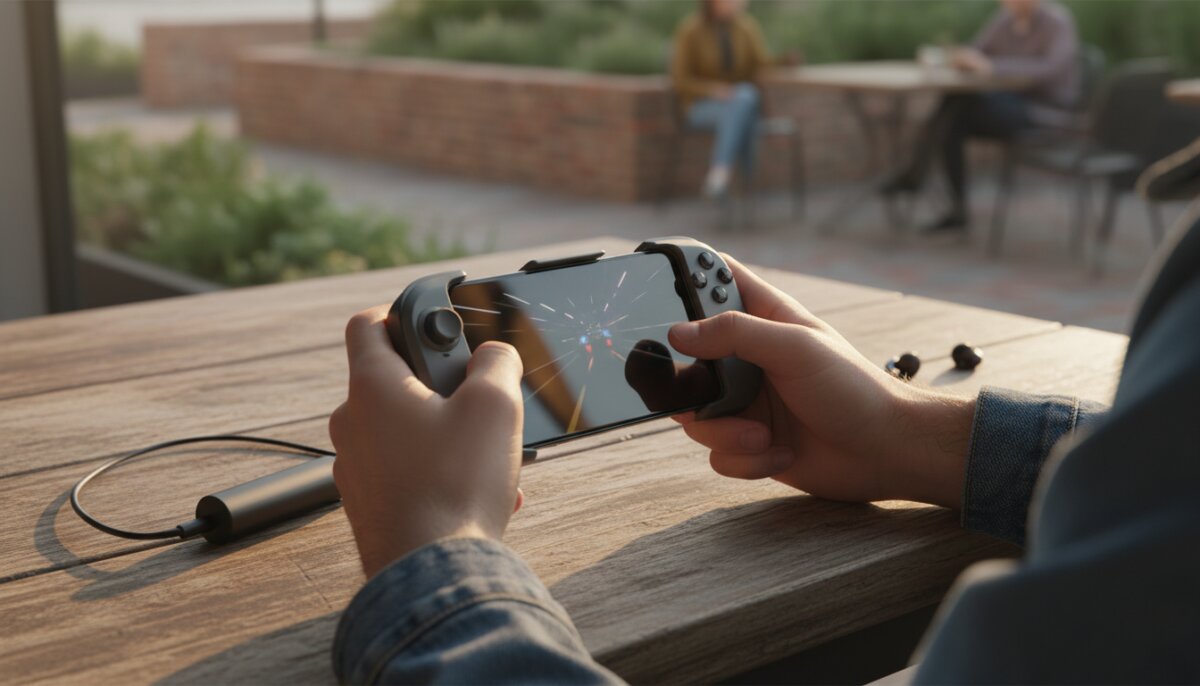
One of the old knocks against mobile gaming was input. Touchscreens are great for some genres and terrible for others. The explosion of affordable, high-quality mobile controllers — clip-on gamepads with Hall-effect sticks, backbone-style grips, and full Bluetooth pads — has erased that complaint entirely.
You can now play a shooter, a fighter, or a platformer on your phone with the same precision you’d expect from a traditional console pad. For a lot of players, that was the final wall standing between “serious gaming” and mobile, and it’s come down.
Why Players Are Drifting Toward Their Phones
This isn’t just about specs. It’s about behavior. The average player’s life doesn’t pause conveniently for a two-hour console session anymore. Between work, side projects, kids, and social commitments, the phone fits the gaps — and game designers have gotten remarkably good at filling those gaps with satisfying experiences.
- Instant access — no booting up a console, no waiting for a 90 GB update
- Shorter sessions that still feel rewarding, not skimpy
- Cross-progression with PC and console versions of the same title
- Lower cost of entry since most players already own a capable phone
- Social layers baked into games, not bolted on afterward
Notice the pattern: every one of those points is about convenience and integration with the rest of your life. Consoles are still incredible machines, but they demand that you come to them. Your phone meets you where you already are.
The Economics Tell the Real Story
Mobile gaming has been the largest segment of the global games industry by revenue for some time now, and the distance keeps growing. The money isn’t coming from whales alone, either. It’s coming from a massive, diverse global audience — players in regions where a console was never a realistic option but a capable phone is.
That global reach matters. Console gaming has historically been concentrated in a handful of wealthy markets. Mobile skipped that bottleneck entirely, bringing hundreds of millions of players into the fold from regions with different tastes, different genres, and different spending patterns.
Monetization Has Matured
Yes, predatory free-to-play still exists. But it’s no longer the only model on mobile. Premium games, subscription catalogs, battle passes with reasonable value, and expansion-style paid updates are all thriving. The “all mobile games are scams” stereotype hasn’t matched reality for years.
Meanwhile, console gaming has drifted toward aggressive in-game stores, paid cosmetics, and online subscription fees of its own. The monetization gap between the two platforms is much narrower than most players realize.
Where Mobile Still Loses
This isn’t a eulogy for consoles. They still do certain things better, and it’s worth being honest about the trade-offs.
Mobile Strengths
- Portability and battery-powered play anywhere
- Massive library across every genre imaginable
- Lower friction to start and stop sessions
- Built-in social, camera, and communication tools
- Frequent hardware upgrades through normal phone cycles
Console Strengths
- Dedicated big-screen, living room experiences
- Thermally sustained performance for long sessions
- A curated storefront that filters out low-effort releases
- Physical media and long-term game preservation
- Exclusive first-party titles with deep single-player design
If you want to sink forty hours into a cinematic single-player epic on a 65-inch TV with a surround sound setup, a console still wins handily. That experience doesn’t translate to a phone, no matter how powerful the chipset gets.
The Cultural Shift You Might Be Missing
For a long time, “gamer” was shorthand for someone who owned a console or a gaming PC. That identity is dissolving. The biggest gaming communities today often form around titles that launched on mobile or have mobile as a first-class platform, not an afterthought.
Content creators have followed. Streamers who once filmed themselves at a desk with a capture card now broadcast mobile sessions from the couch. Tournaments for mobile esports draw stadium crowds in parts of the world where console esports never got traction.
Developers Are Voting With Their Roadmaps
Watch where studios are putting their engineering time. Cross-platform launches increasingly include mobile on day one. Engines like Unity and Unreal have optimized heavily for mobile deployment. Even traditionally PC-centric genres like extraction shooters and grand strategy have working mobile versions now.
When developers invest there, it’s because that’s where the players and the revenue live. Roadmaps don’t lie, even when marketing narratives do.
How to Get the Most Out of Mobile Gaming Now
If you’ve been dismissing mobile as a serious platform, here’s a quick framework for giving it a fair shot without falling into the low-quality end of the pool.
- Pick up a real controller — a clip-on grip pad changes which genres are actually playable
- Look for premium or subscription-based catalogs rather than browsing top-grossing charts
- Try console or PC ports before jumping into mobile-first titles if you’re unsure about quality
- Use cloud gaming for the heaviest AAA experiences where native performance still lags
- Mute notifications during sessions so your game time doesn’t get interrupted constantly
That last one sounds minor, but it’s the biggest quality-of-life fix for serious mobile gaming. Your phone is a noisy device by default. A focus mode turns it back into a dedicated gaming machine for as long as you want it to be one.
Common Questions About the Mobile Shift
Does this mean consoles are dying?
No. They’re being repositioned. Consoles are becoming premium, enthusiast-focused devices rather than mass-market entertainment hubs. That’s a different business, but not a dead one.
Is mobile really competitive for hardcore genres?
For many of them, yes — especially with a controller. Fighting games, shooters, RPGs, and strategy titles all have strong mobile options. Flight sims and complex simulation games still lean PC-first.
What about battery drain and overheating?
Still a real limitation. Long intense sessions will heat your phone and chew through battery. For hour-long sessions it’s fine; for marathon weekends, a console or PC is a better tool.
The Takeaway for Anyone Paying Attention
The story isn’t that mobile crushed consoles in some dramatic head-to-head battle. It’s that mobile quietly became the default entry point for gaming worldwide while consoles were busy competing with each other. When the biggest audience, the most revenue, and a growing share of top-tier development attention all point toward one platform, the hierarchy has already shifted — whether the enthusiast press frames it that way or not.
You don’t have to pick a side. The smart move is to treat your phone as a legitimate gaming device with its own strengths, pair it with a controller, and keep your console for the experiences it genuinely does better. The players getting the most out of gaming right now aren’t loyal to a platform — they’re loyal to good games, wherever those games happen to run.